Duns Spa Wood, Scottish Borders
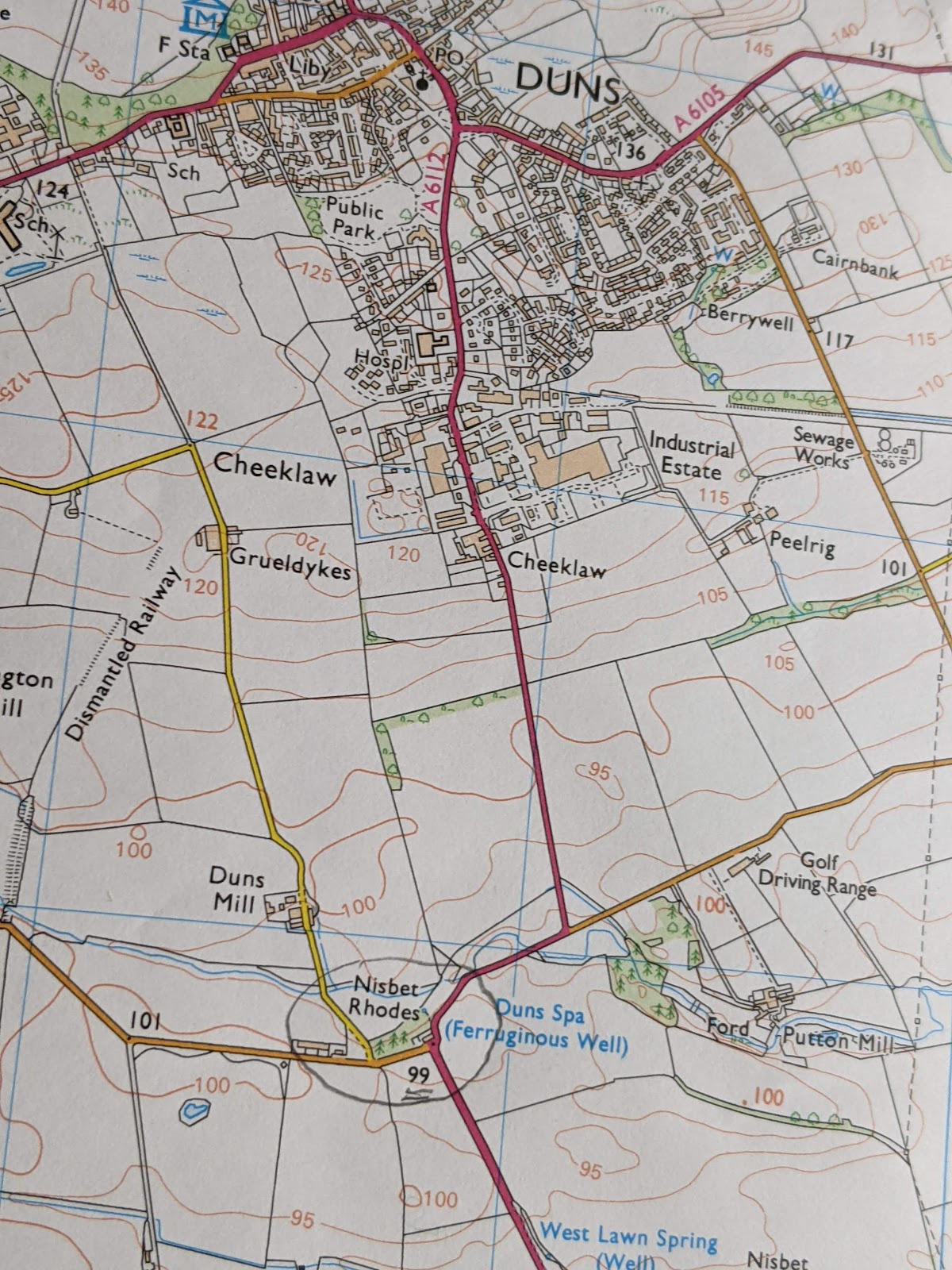
Duns Spa Wood in the Scottish Borders is a 2.5-acre wood owned and managed by Lancelot Robson of Bryneich Coppice Management. Between 2018 and 2023, overstood Norway spruce was felled and replanted with British hardwoods. The site also includes an undisturbed small sliver of ancient woodland. It adjoins Nisbet Rhodes, a former coaching Inn, built in 1747.
Lancelot is now six years into the project, from the start of replanting. Some hazel and birch will be ready for their first cut in 2025/26. His aim is to re-establish coppice rotation to enhance biodiversity by increasing edges and open space, provide opportunities for training and exercise of traditional skills and engage the local community with woodlands and nature. Coppicing products will be primarily for community and personal use, but the stocking plan includes species with significant commercial uses.
Historic use
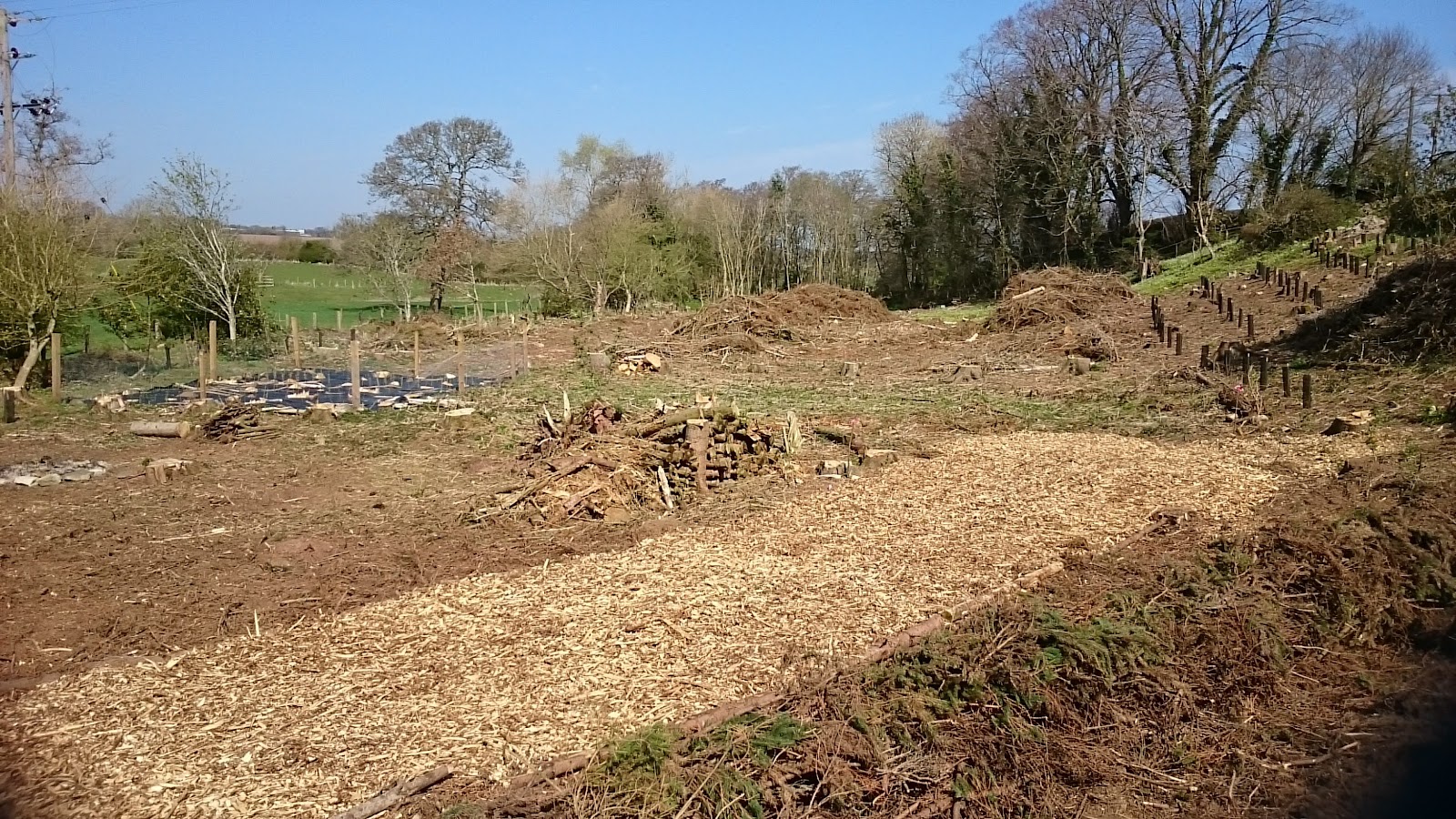
The wood appears on the earliest local maps, but most was turned into pasture around 1900. The ancient woodland lies on a steep slope, which probably saved it. A crop of Norway spruce was planted in around 1965 but then neglected. An International Harvester tractor registered in 1958 was found abandoned in the wood in 2018. A number of trees had to be cut down to extract it. The wood was sold to the owner of Nisbet Rhodes in the 1990s by the adjoining estate owner, presumably because extracting the timber was not economically viable due to the geography. Coppice planting began in 2018.
Set-up
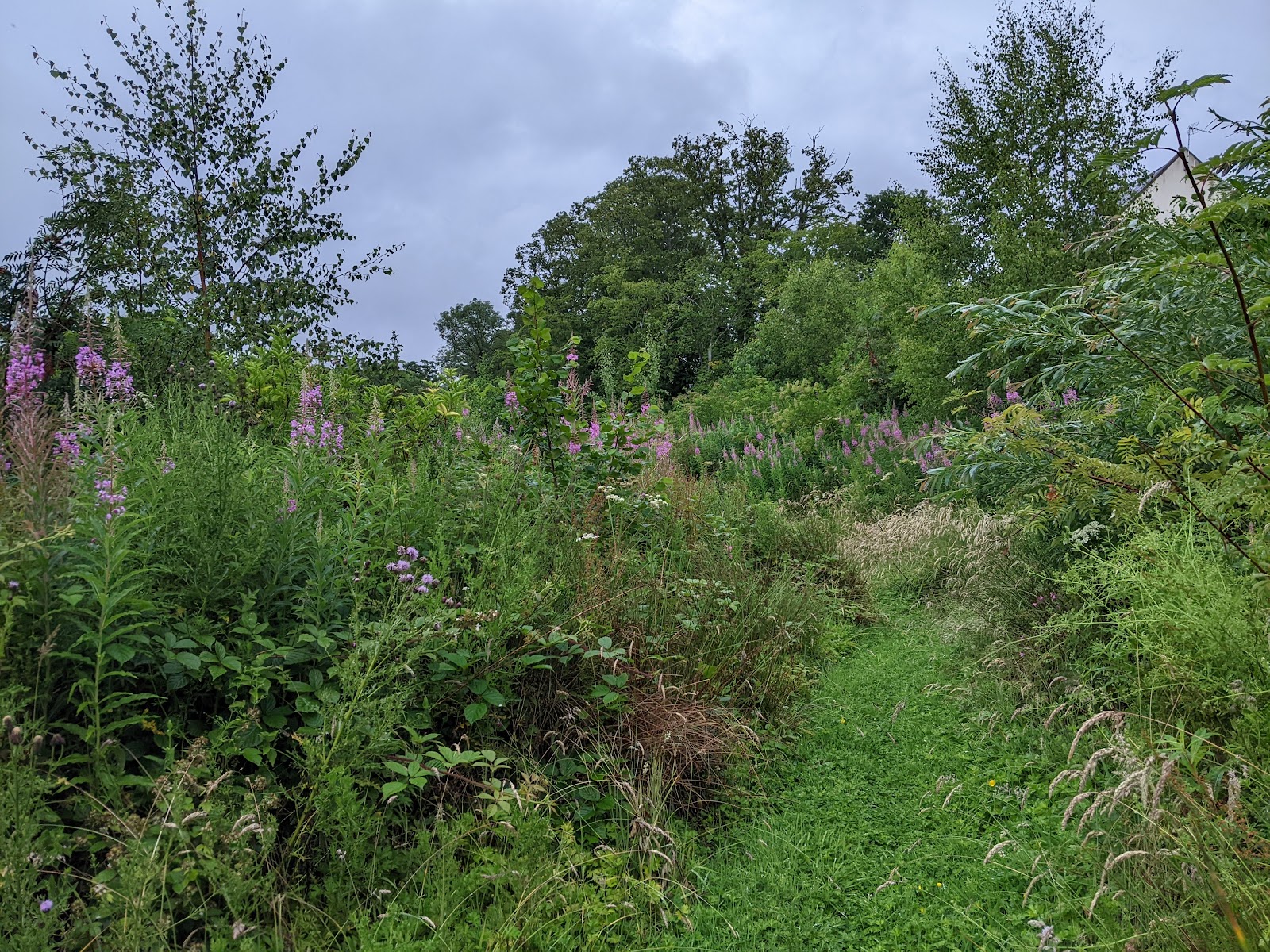
As of 2025, the dominant species are birch, willow, alder and hazel. The basketry and goat willows are on a 1–2-year rotation, while the birch, hazel and alder (first coup) are on a 6–9-year rotation. There are about 14 species, with some alder, rowan, oak, holly, a small basketry willow bed, goat willow, sweet chestnut, field maple, crab apple, beech and hawthorn. Some blackthorn, ash and wych elm survive in the ancient woodland area. The Nisbet Rhodes garden contains a registered veteran hawthorn estimated at 275 years. The ground flora is of grasses, lots of willowherb, ferns, sedges, rush, some bracken and woodland flora.
The area is too small and the land is too soft to support significant timber production, with two thirds located in a flood plain. Owner Lancelot says that coppicing is much more practicable and relevant to his aims and the local community. It also has a more significant biodiversity impact. Since the start of the project, older woodland flora has started to spread across the woodland floor, a significant number of bird species have reappeared in numbers, including ground-nesting birds and raptors. Mammals also appear on the increase. The wood is now beginning to produce a small income, rather than being mainly an unstable and potentially dangerous monoculture with significant costs to clear it.
The main complication is that two thirds of the land are within the flood plain of the Langton Burn, to which the wood has a short frontage. Approximately a quarter of the wood floods regularly in the winter. The rest is mainly on a quite steep hillside. The water table in the flood plain is often only 18 inches below the surface. During the timber extraction two vehicles had to be retrieved from the mud by a tracked vehicle.
The site is also crossed by a local high-tension electricity line, with several others converging near the boundaries, leading to periodic visits from Scottish Power teams, whose training does not include sustainable woodland management.
Lancelot says: ‘The original plan submitted in 2015, drawn up prior to our ownership by a professional, to support the Felling Licence application was, in my view, unhelpful . The Forestry Commission Licence required 660 whips comprising 40% oak, 40% beech and 20% miscellaneous British hardwoods. The original plan appeared to be based on planting at three-metre centres, on the assumption that the ground was firm, and the cropping was for timber. With assistance from Borders Forest Trust, I obtained an informal amendment, substituting birch and alder for the beech element. I have now planted much more densely than required, with approximately 1,350 trees in the ground, so far with a 92% success rate, while still retaining significant areas of ride and clearing.’
Working it
When Lancelot started in 2018, he knew there was a family of three roe deer and a few rabbits. The deer tend to follow the burn. The wood was mainly devoid of vegetation under the spruce planting. The post-and-wire fences were generally ineffective. Along the A6112 boundary, the fences had decayed entirely, and could not be renewed due to the steep slope down from the road to the wood, and the ancient trees on it.
Brash from the felling was used to create brash boundary hedges over time, and these are maintained and renewed as necessary. However, a quarter of the wood’s frontage faces the A6112, so deer browsing is a problem. Individual tree guards are used, and elder is allowed to hide the regrowth from predators. Brash is reused for dead hedging where possible. Some logs are used for supplementary heating in the owner’s wood-burning stove. The remainder goes into windrows.
Lancelot currently does most of the work himself, but occasionally friends and family volunteer to help. He mainly uses hand tools but occasionally has to use a chainsaw on difficult trunks. Once the site was cleared for replanting, he had no need for other machinery. A Pottipukti planting tube for planting cell-grown whips is used, which saves much time and effort.
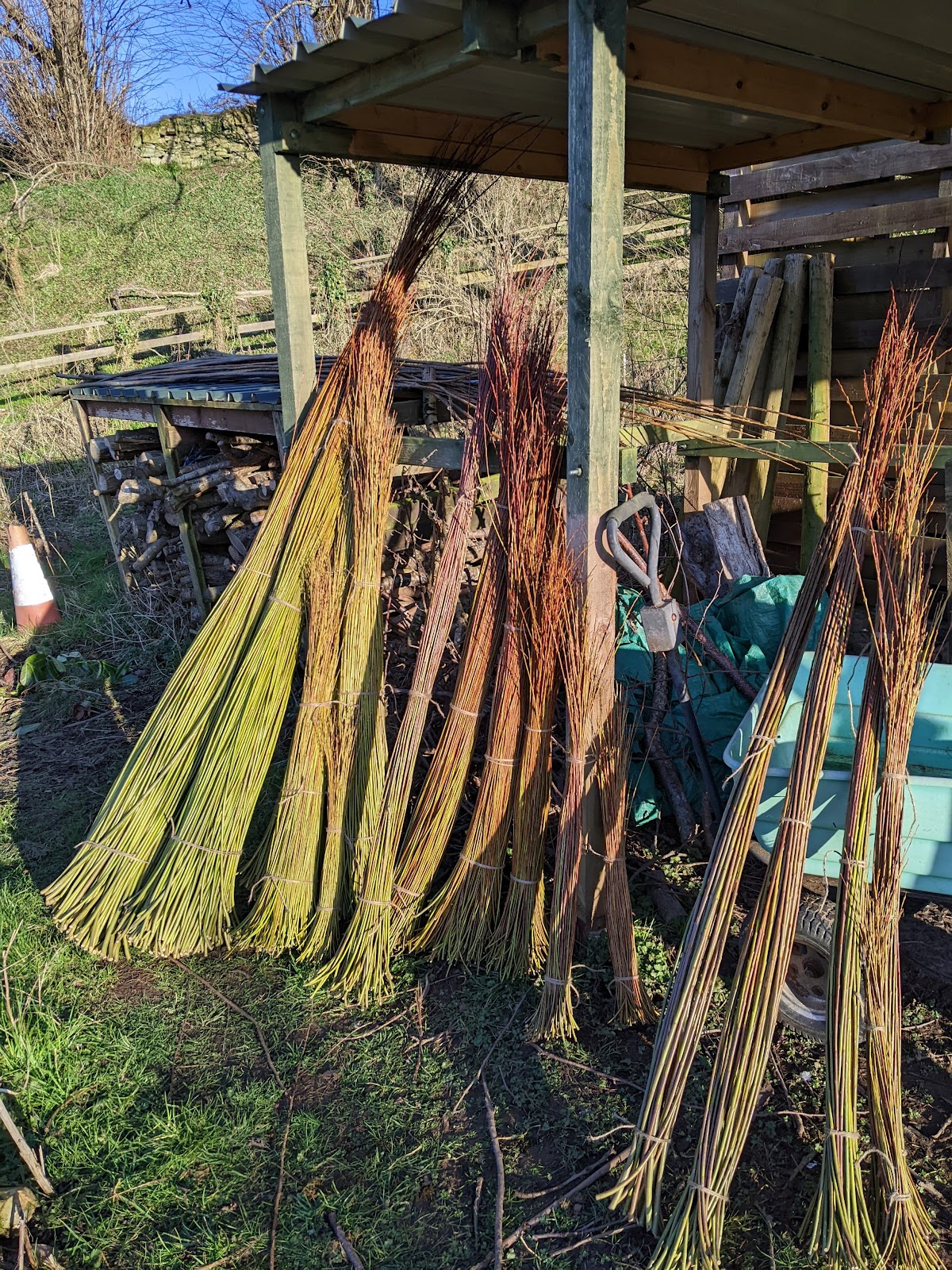
Currently, the coppice produces mostly basketry willow, small turnery balks and low-grade sticks for traditional crafts and uses.
Lancelot is also growing an area for quiet contemplation in the wood, which should be operational by 2027. He says: ‘The project here has several aims: increasing CO2 absorption, the ecology, personal fitness, forest education, and a contribution to running expenses. In time the wood should be attractive for others to take on and maintain.’
Lessons learnt
Looking back, Lancelot would have liked to have known more about coppicing generally from the start. ‘I am largely self-taught. Agricultural courses locally concentrate on agriculture. Forestry courses are intended for young new entrants, who have grant/loan money to follow them, and also several years to do it. The woodland industry needs to cater for career changers as well. There is a gap in the market for regional short courses, and “boot camp” style courses, which are generally not well advertised,’ he says. ‘Fortunately I am a member of the Association of Pole-Lathe Turners and Green Woodworkers, came across the National Coppice Federation and the National Hedgelaying Society, and can afford the time and money to travel to their national meetings and courses. However, many are not so fortunate.’
Lancelot has been disappointed by the general lack of interest from local schools and guiding/scouting: ‘I have three schools (two primary, one secondary) within easy walking distance of my two woods, but despite introducing myself and showing interest, no one has even enquired about what is on offer. Other coppicers and community woodlands elsewhere report similar experiences. On the other hand, while demonstrating, I have met students at local events who are not prospering at school but have excellent skills and interest in woodworking. As a retired educator myself, I think that schools and voluntary groups are losing both educational and financial opportunities. There is a gap here, which maybe the Scottish Coppice Network/Reforesting Scotland can look at filling, by publicising the benefits of Woodland Education and Coppicing in schools and elsewhere. Even just a leaflet offering talks from a group of volunteer speakers would be useful. We need our next generation of coppicers!’
On the plus side, Lancelot has been gratified to discover a number of (usually) small local land owners who are planting or reforesting woods but need assistance with maintenance and practical advice. Some have come via the Borders Forest Trust, but others have come to him directly to learn from his experience.
Contact Details
If you wish to comment or ask about any details of the case study, please post a reply below and we will notify the author if they don’t spot it, so that we can all benefit from the learning.
If you’d like to get in touch directly with Lancelot, you can email him at L.Robson22@gmail.com.


Coppice Case Study Project
This case study is part of Reforesting Scotland’s Coppice Case Study Project, which aims to map out Scotland’s coppice woodlands and share knowledge by publishing case studies. You can read more about the project and other case studies here.