Kirkton Wood, Aberfoyle
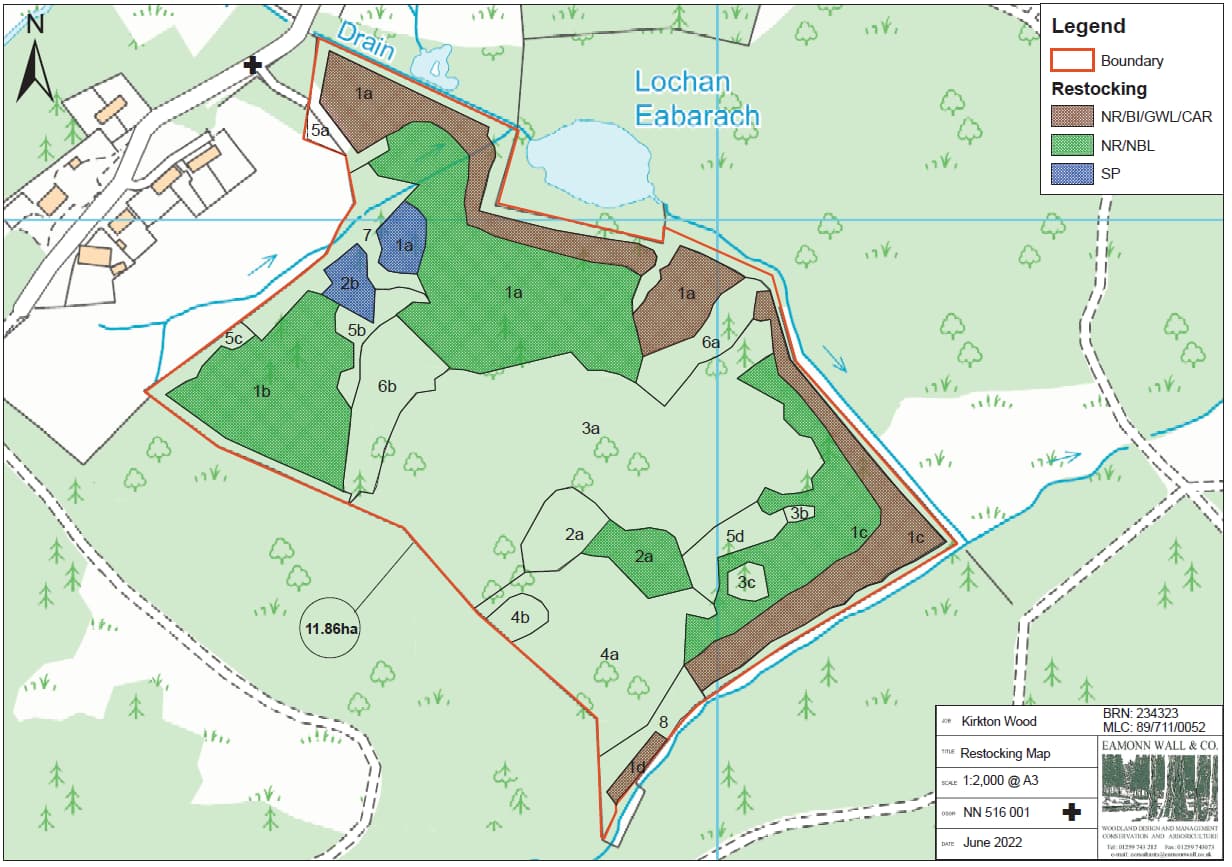
Kirkton Wood near Aberfoyle, Stirling, is about 12 ha, half of which is semi-natural ancient oak, the other half was Sitka spruce, which is now cleared and regenerating naturally to wet woodland, marsh and bog. The coppice area is about 3 ha and is two years into rotation.
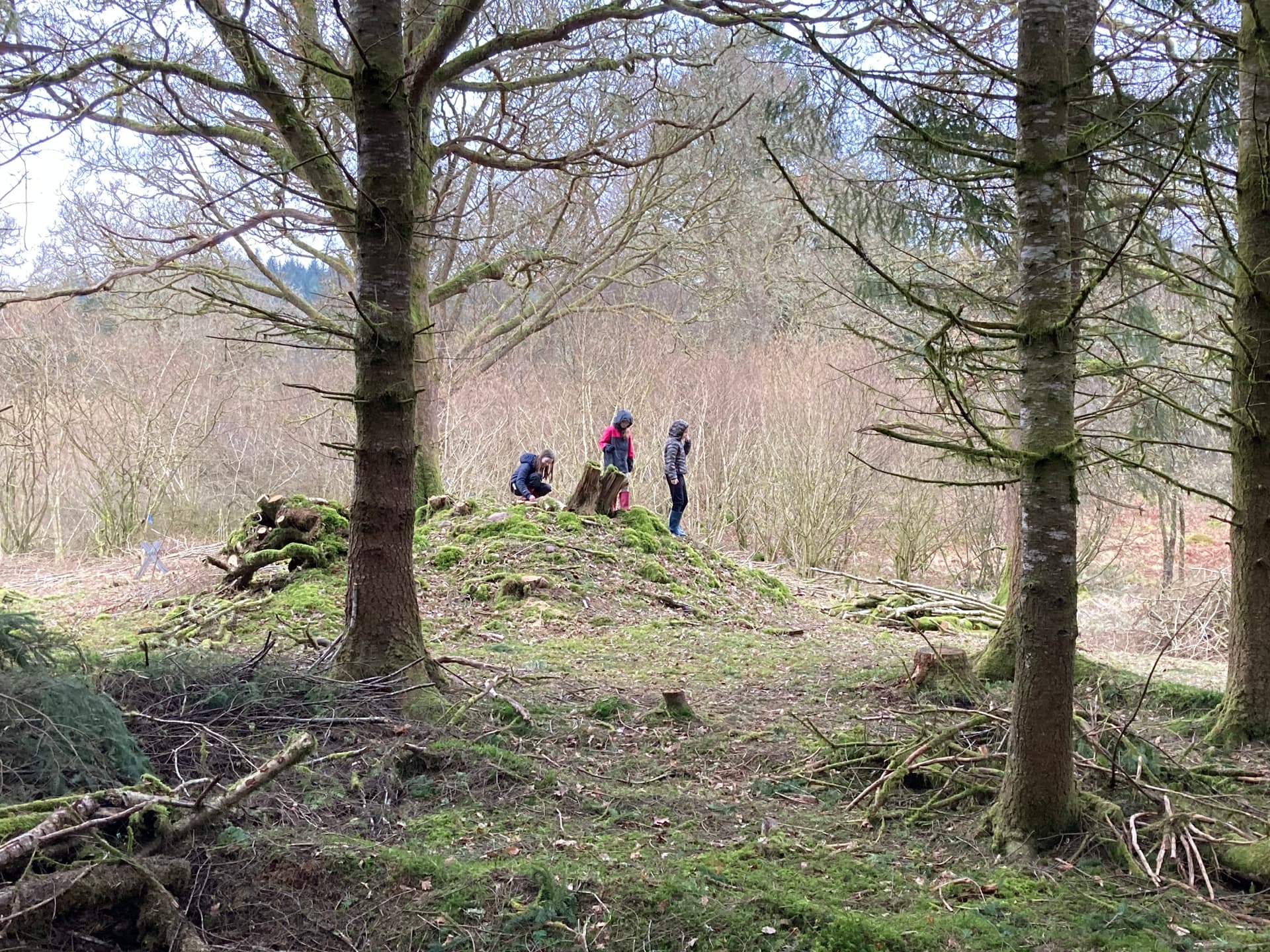
Current owner Angela Newton bought the woodland in 2015, with the primary objective of protecting and enhancing the biodiversity. The wood also sees a lot of community involvement, with activities run by social enterprise Green Aspirations, including for four local primary schools.
Angela says: ‘Over the years I have been at the wood I’ve thought a lot about my long-term goals. In that time the increased involvement of local people and especially Green Aspirations has established my thoughts around the idea of the wood as a place for the local community to engage with the natural environment, and also to connect with the traditional skills related to woodland management. I am also interested in developing it as a resource for the materials used in those traditional crafts.’
Aims are to re-establish the coppice rotation to enhance biodiversity by increasing edges and open space, provide opportunities for training and exercise of traditional skills and engage the local community with woodlands and nature.
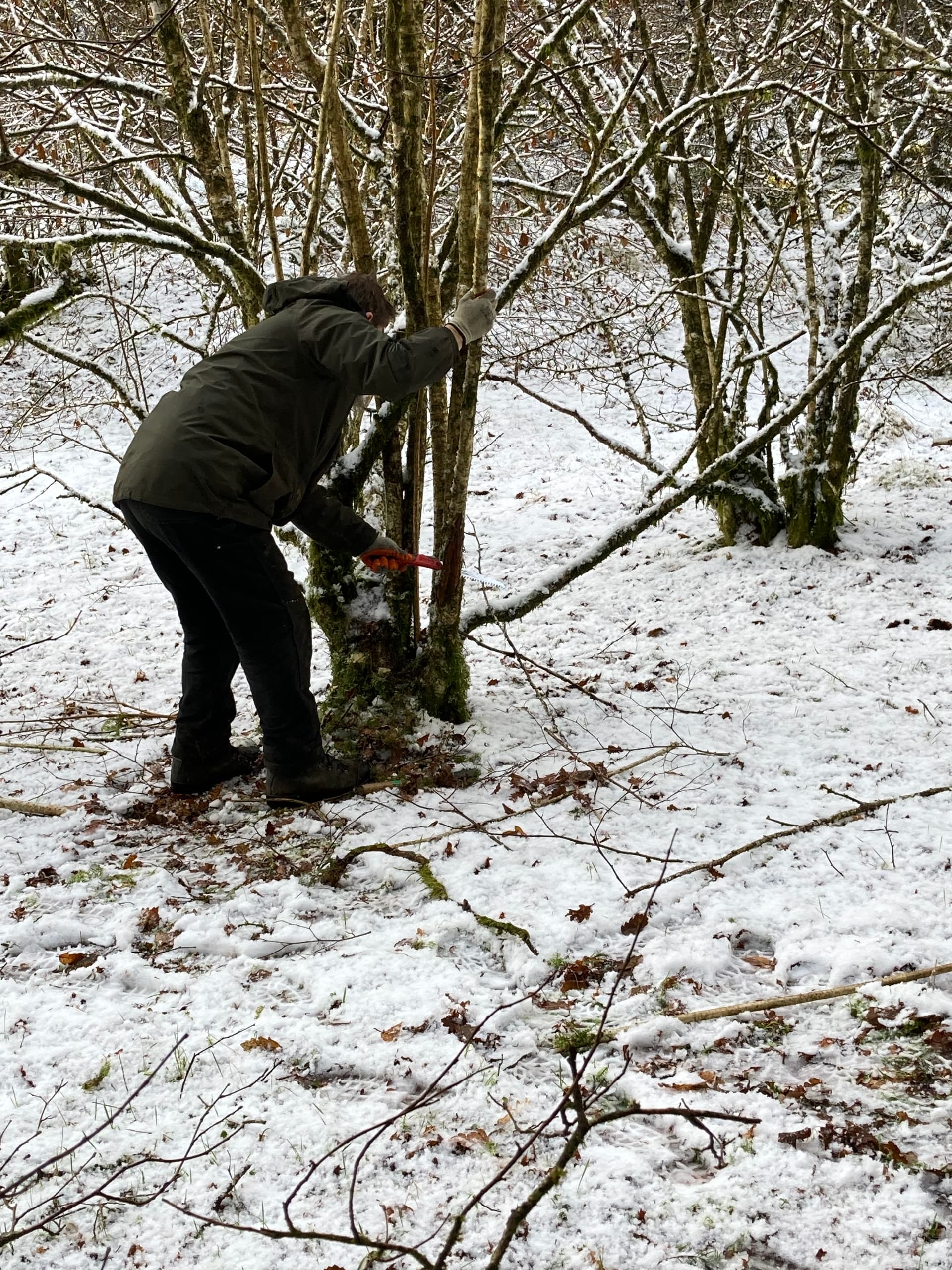
Historic use
The previous owner lived in Glasgow, raised pheasants, rented the wood out for shooting, and planted the Sitka on deep peat for tax reasons in 1988. Before that it was used by the farming family for wood pasture and firewood extraction; it is unknown if coppicing was part of their work. Further back the wood was owned by the Dukes of Montrose, who may have planted English oak to ‘improve’ the stock for tan bark and charcoal for their extractive industries. It was on the Roy military map in the 1760s. A very old billhook, with its handle almost completely rotted away, was found leaning against a tree in a potentially previously coppiced area.
Set-up
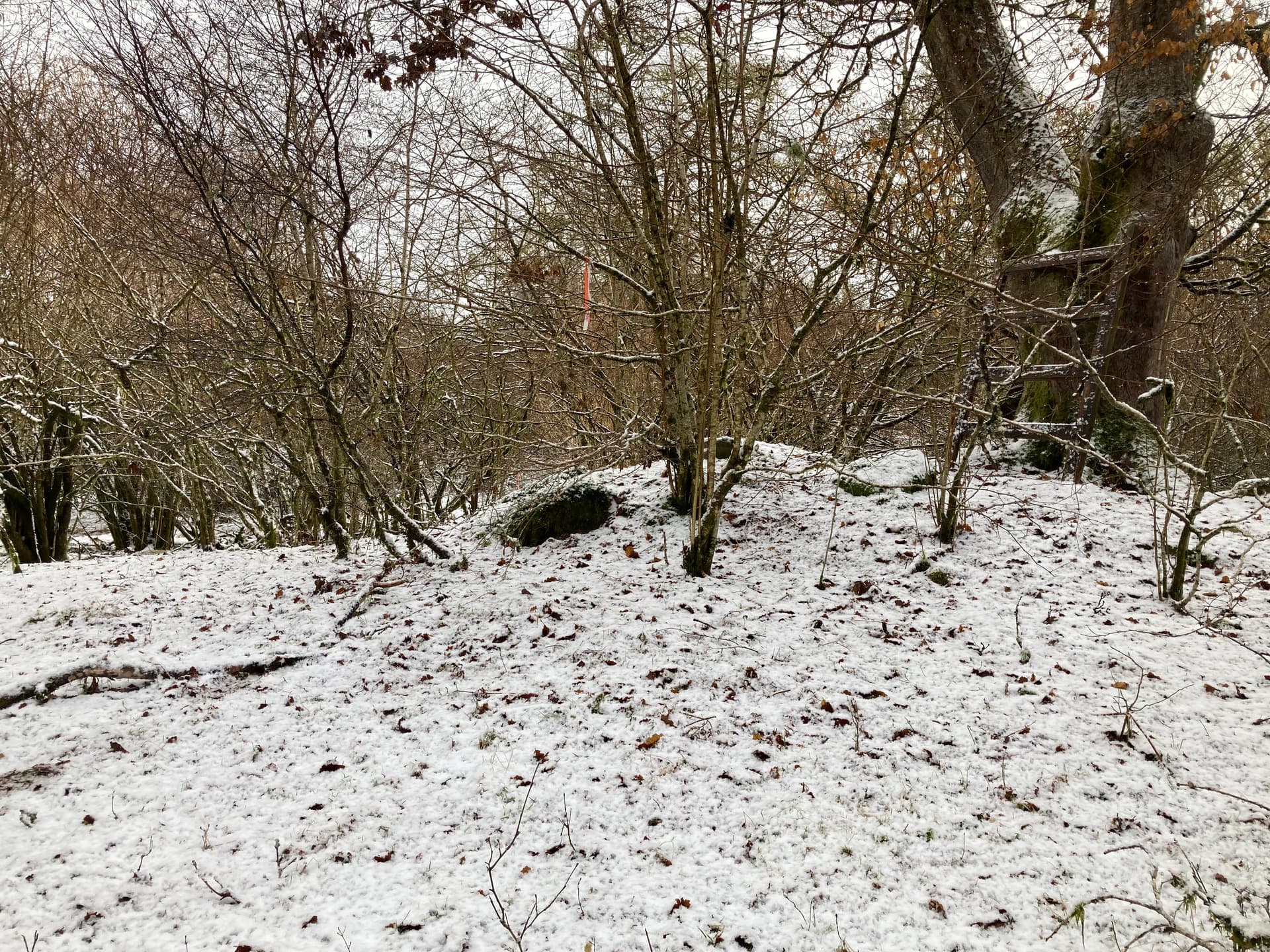
Coppicing began in 2023. The area currently being coppiced would have been pasture up to about 1988 and most of the stools that have been cut are relatively recent. There are some much older stools that may have been coppiced in the past, with mostly even-aged trunks around an empty centre, but too long ago for any old stumps to remain.
The main complication is access: The ground is steep in places and quite rocky, and up to 500m from the road and main work area. In the first year wood was carried out by hand, or using a motorised track barrow for short heavy material. For the second year a tractor and trailer have been used, but it is still not easy due to the unevenness of the ground.
Each coupe is fenced with 1.8m black plastic mesh, with blue nylon rope and using coppice poles as fence stakes. Although deer browsing is now considerably reduced due to Forest and Land Scotland deer management programmes in the area, cut stools outside the fence are heavily browsed so the fence is both necessary and effective.
The species mix is hazel under oak with some rowan, holly and willow and ground flora of grasses, ferns, sedges, rushes and some bracken. Recently the second coupe has been cut.
The two cut coupes have allowed more light into the woodland, with much greater growth of ground flora. Other biodiversity gains have not been assessed yet.
Working it
Timber production from individual oaks may be an option in the future. However, Angela decided to start with coppicing as it is much more achievable and relevant to the local community and has a more significant biodiversity impact.
Coppicing products are primarily for community and personal use. Currently they are mostly low-grade sticks for traditional crafts and uses, especially providing materials for Green Aspirations courses and charcoal-making.
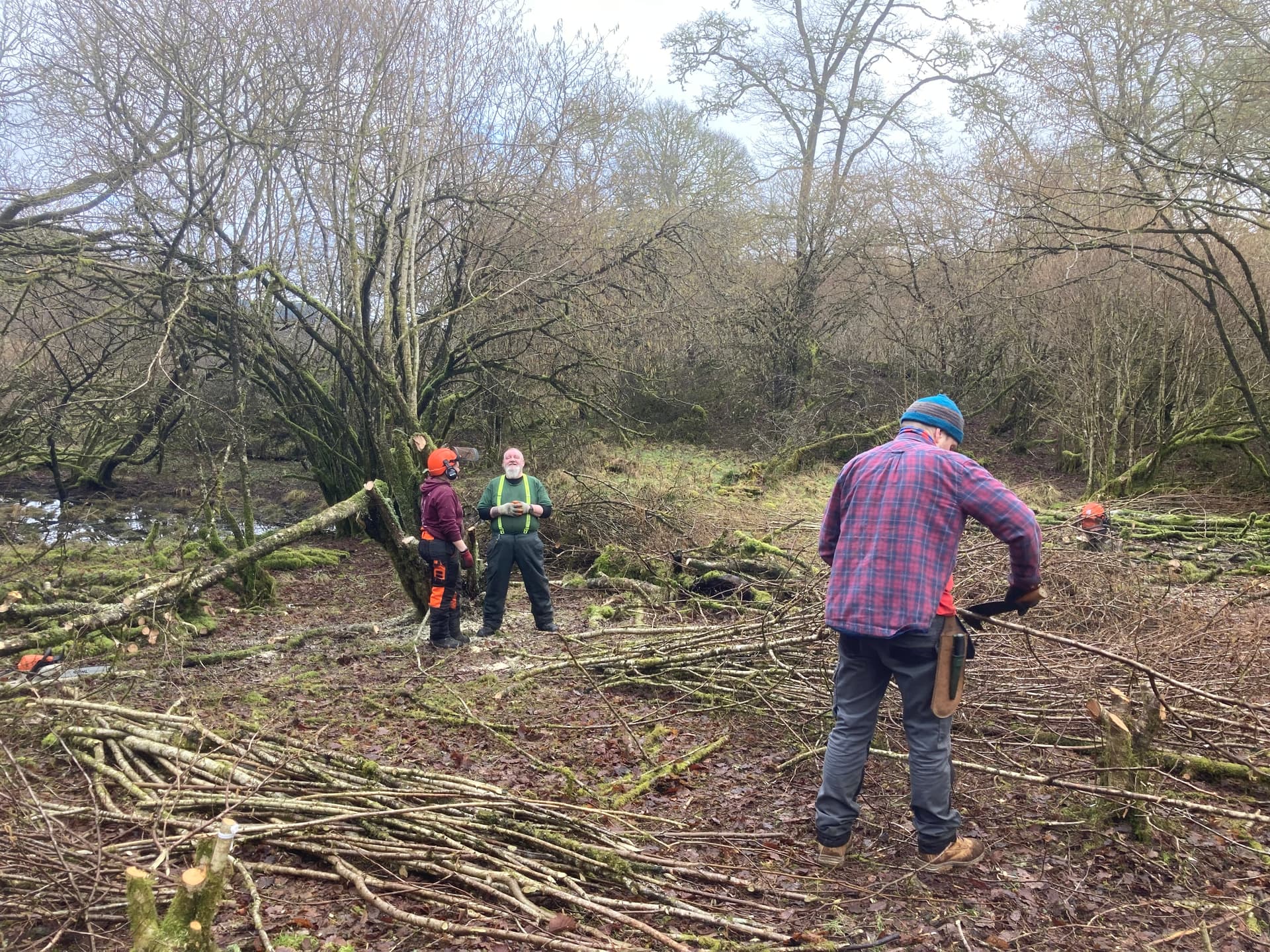
The work is carried out by volunteers (both regular and event-based), Green Aspirations staff and the owner, mostly with hand tools, although a chainsaw is used for the heaviest trunks. Other machinery include a track barrow and tractor.
Brash is mostly piled up to rot naturally, although as much as possible is used for charcoal, biochar and firewood.
Lessons learnt
From the experience so far, Angela wishes she’d started with the coppicing earlier. The community response, especially schools, to the coppicing and charcoal event held in January 2025 has been a big success.
As for the machinery used, the track barrow has proved useful but is very fussy about clean petrol, and rather dangerous on the uneven terrain. Angela would have got something else, maybe a tractor, earlier and she would have insisted on keeping the brash track across the felled Sitka areas intact since this would have facilitated access to the back of the wood (the brash track was mostly pulled up, including log bridges, to be chipped as the site was cleared).
Future vision
Owner Angela says: ‘I plan to keep developing the coppice area until we have six or seven coupes in rotation, then continue with this rotation. I am also developing a willow plantation for basket-making materials, and would like to establish a dense oak area for traditional small diameter oak crafts. In the longer term I would like this woodland to become part of the local community, with an emphasis on community engagement, and supplying materials and training in traditional skills.’
Potential future projects envisioned are oak and hazel baskets and thatching spars.
Contact Details
If you wish to comment or ask about any details of the case study, please post a reply below and we will notify the author if they don’t spot it, so that we can all benefit from the learning.
You can also contact Angela directly at anangienewton38@gmail.com.


Coppice Case Study Project
This case study is part of Reforesting Scotland’s Coppice Case Study Project, which aims to map out Scotland’s coppice woodlands and share knowledge by publishing case studies. You can read more about the project and other case studies here.