March Wood and Spring Wood at Garronfield, near Dalbeattie, Dumfries and Galloway
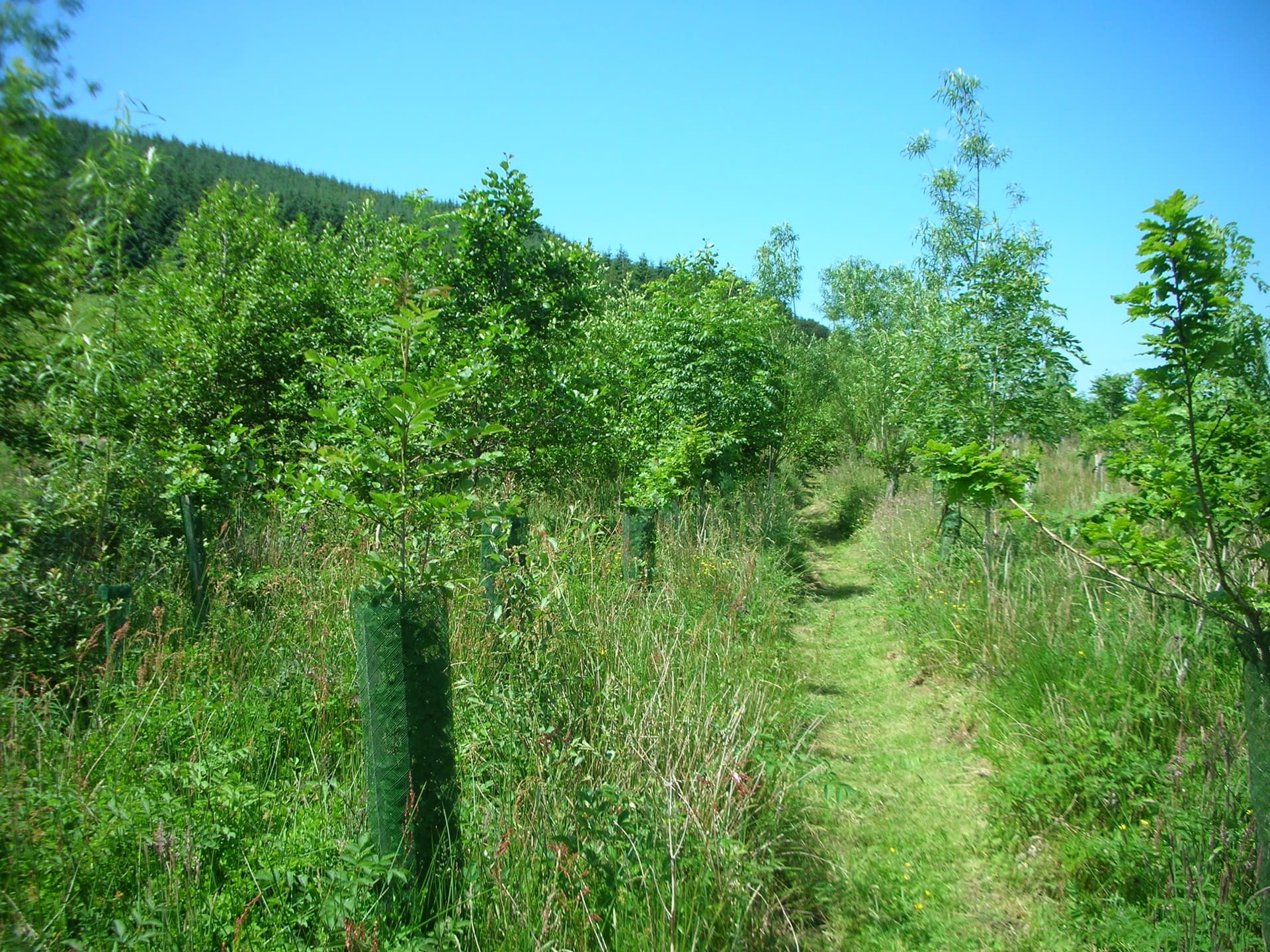
In June 2010 Robert Drake and his wife Karen Morley bought a pair of derelict farmworkers’ cottages and a ten-acre field. Two years previously, while living in Cumbria, and having often worked in other peoples’ woodlands, Robert had come to a realisation: he wanted a wood of his own.
He recalls: ‘Garronfield, as we were later to name our place, was almost perfect for what we intended, which was to have enough land to plant coppice woods to provide fuel for a home, and to have space for a pair of Fell ponies. Of the ten acres, six or seven were evidently boggy, indicated by soft rush. The remainder was fairly poor pasture. The field was almost level, just a gentle slope to the south.’
The total area of coppice wood at Garronfield now is 3.75 acres. March Wood is approximately 3 acres, of which 2 acres are coppice, and Spring Wood 1.5 acres. Two shelter belts, which originally were short rotation coppice willow, producing basketmaking material, are now left to grow on for fuel, making up the total. There are other areas planted with trees that are not part of the coppice cycle.
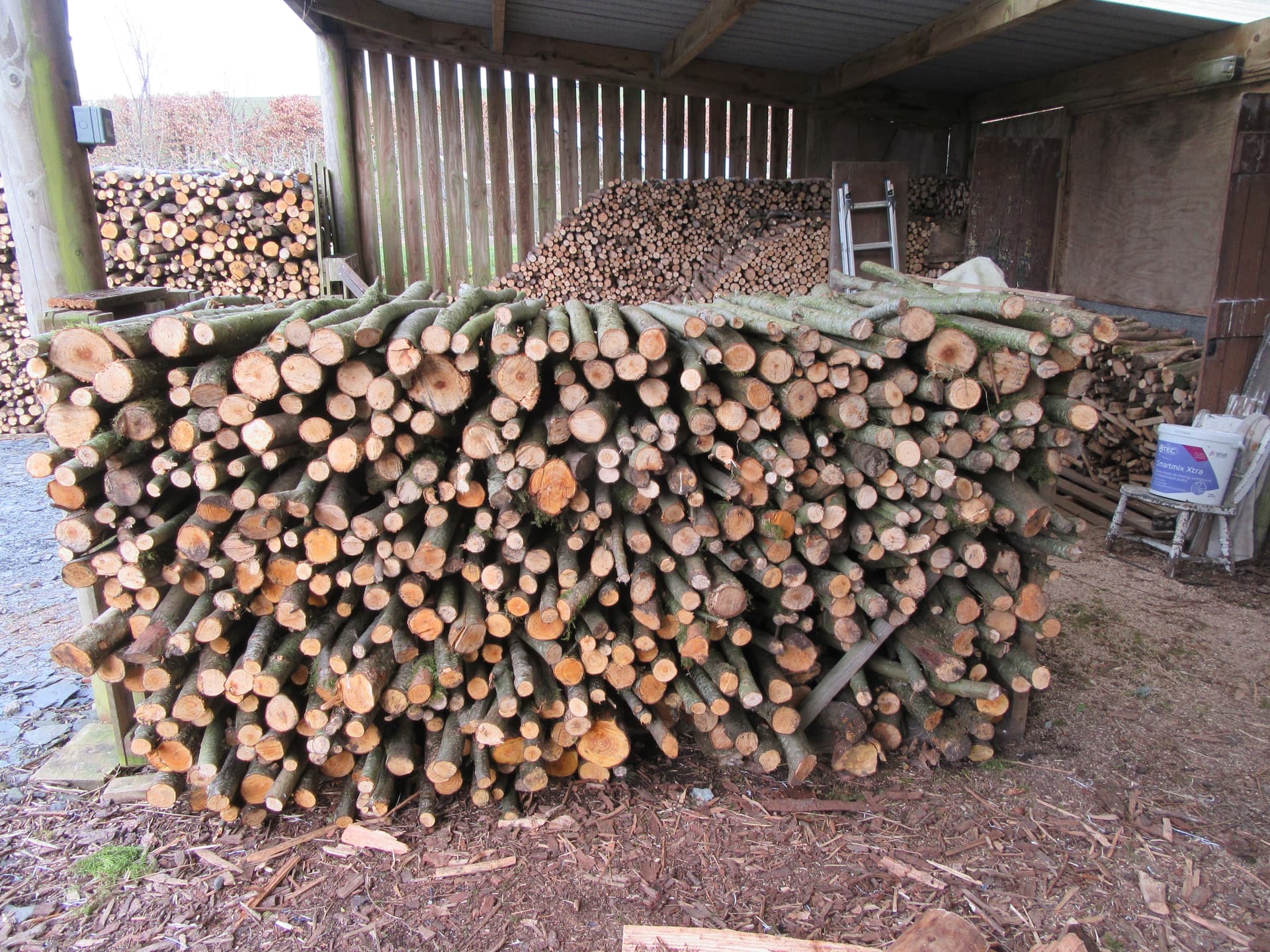
The sole aim of planting March and Spring Woods is to provide fuel for the owners’ property. ‘Having done research into the technique of coppicing, I knew that it was the best way to provide good quantities of suitable fuelwood from a given area,’ Robert says. ‘When cut at the right time, before growth becomes too big, small diameter coppice poles are ideal, as they only require to be sawn to length. No splitting is done, making the work easier and speedier. I have made a cradle that can hold 20 or 30 poles, which can then be chainsawed into lengths safely and quickly.’
The couple have a biomass boiler that runs the underfloor heating and domestic hot water, and a fire in the living room. The boiler requires around 25 cubic metres of wood per year, and the living room hearth a further 10 cubic metres. The last harvest (2024/25) yielded 20 cubic metres from two coupes, one in each wood.
Up to the present, Robert and Karen have bought in kiln-dried softwood logs for the boiler from a nearby supplier, and hardwood logs from another local supplier. They are now self-sufficient in fuel for the living room hearth, and making an increasing contribution to the boiler. They hope to be fully self-sufficient in fuel in the next two to three years.
Set-Up
In October 2010 Robert ‘dolloped’ two areas that were to be planted with trees, using a 13-ton digger with metre-wide tracks. ‘Its pressure on the ground was so low I almost thought it might float on water, but I didn’t test this,’ he says. The overturned turfs were at roughly 2-metre spacings.
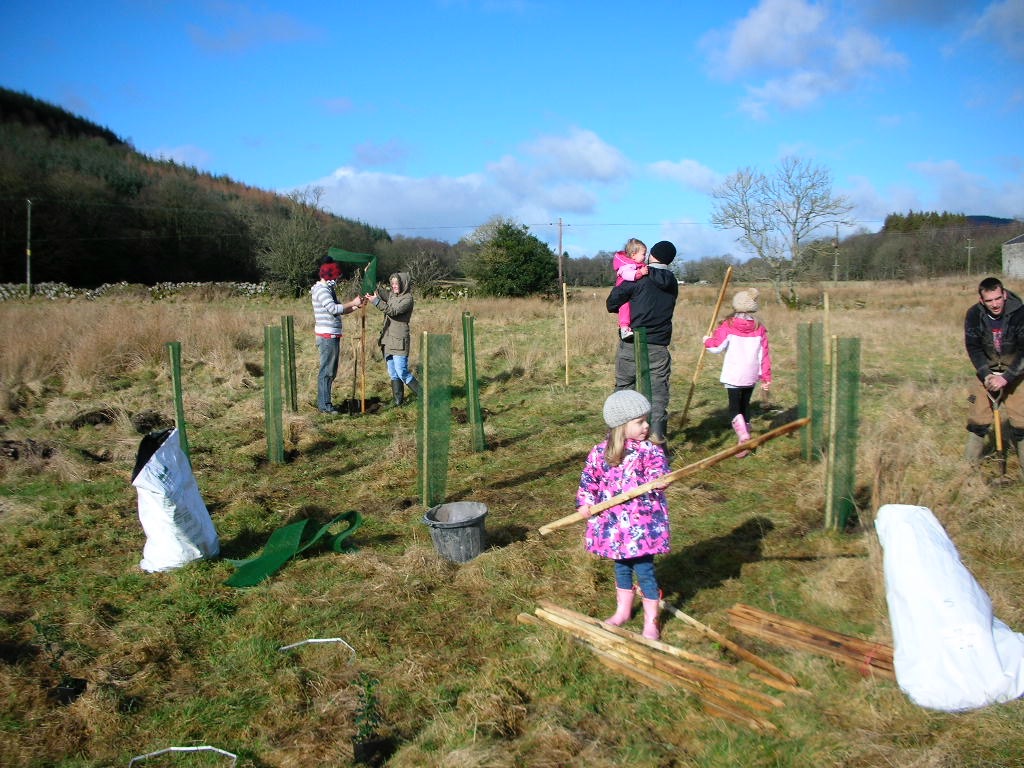
In early 2011 Robert and Karen ordered 3750 trees of a range of native broadleaves from Trees Please near Hexham in Northumberland, plus mesh guards and hardwood stakes. Saturday, 26 February 2011 was the first planting day, in what was to become March Wood, helped along by most of the family. The youngest grandkids were not much help, but their parents made up for it, and several hundred trees were planted, and provided with shelters, stakes and vole guards. The rest of the planting was carried out by Robert and Karen themselves and completed by mid-March.
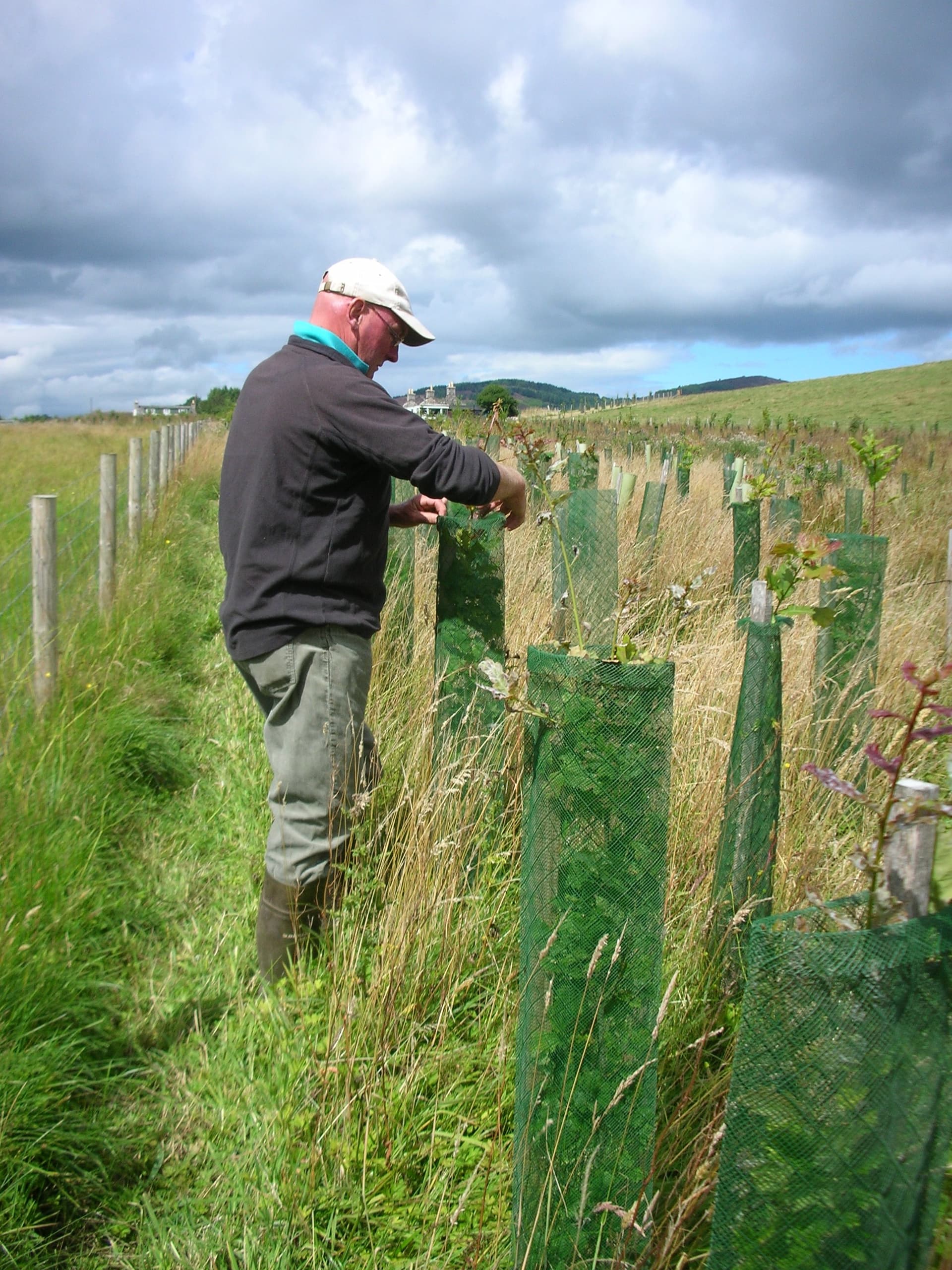
There are roe deer in the vicinity but no rabbits to date. The trees in the initial planting were protected with plastic mesh guards. Robert says: ‘We couldn’t afford shelters for all the trees, so there was an amount of browsing damage, but as soon as the trees with guards had poked their heads out, the guards were removed and transferred to trees that had been browsed. There were some losses, but the majority recovered.’
The mix of species chosen is a quite traditional one: oak/ash/hazel, with alder and downy birch for the wettest areas. After the initial planting, willow (Salix viminalis varieties) was used to interplant some areas to provide shelter for the slower-growing species.
Karen wanted the woodland edges facing the house to be uncoppiced, and consist of trees that have particular attractive qualities: blossom in spring, varied autumn colours or producing edible fruit. So the couple have planted rowan, gean, guelder rose, field maple, elder, crab apple, Norway maple, aspen, damson and dogwood. There are also hawthorns along some external boundaries, and a scattering of holly, including Holly Grove, a circle around a single oak, a memorial to Robert’s eldest grandson.
Each wood is divided into four coupes, or haggs, of differing areas, from a quarter acre to nearly two-thirds. The rotation is only now getting under way properly, because of the differing growth rates of the various species. One coupe has been cut twice already, being composed of mainly alder and willow. Another coupe, predominantly oak, has been cut once, and the primary coppicing is yet to take place in two other coupes. It will be another three or four years before the rotation becomes regular.
Working It
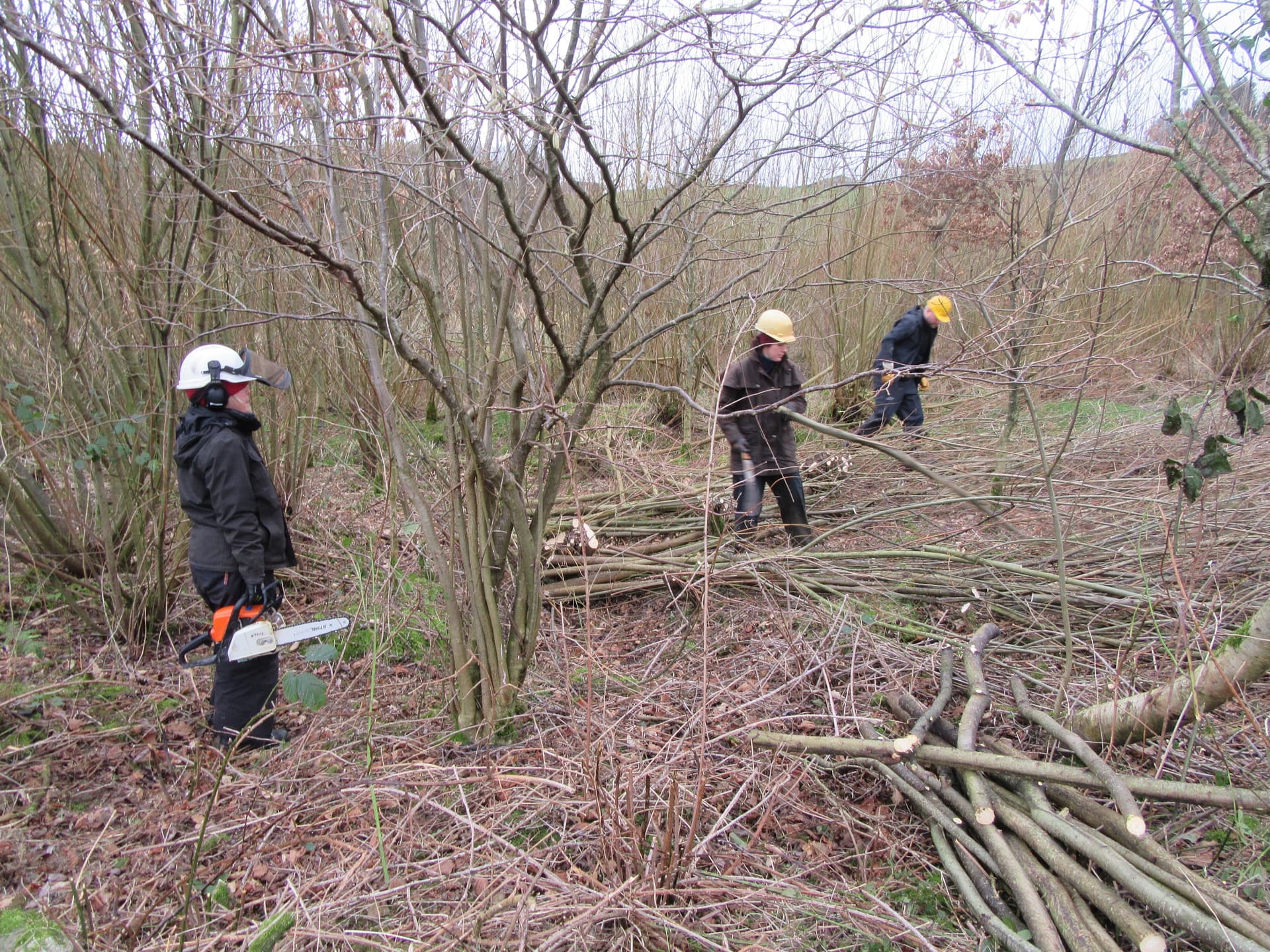
As primary coppicing commenced, the mesh shelters were removed, the trees were felled at a height of around 30cm, the trunks cut to roughly 2-metre lengths for easy handling, and the brash spread on the ground around the stools. In this manner the entire coupe can be covered in a layer of brash, and this effectively deters deer. It also deters humans and dogs, which is helpful in preventing damage to regrowth on the stools. The brash naturally rots down over a couple of years, thus improving the woodland soil.
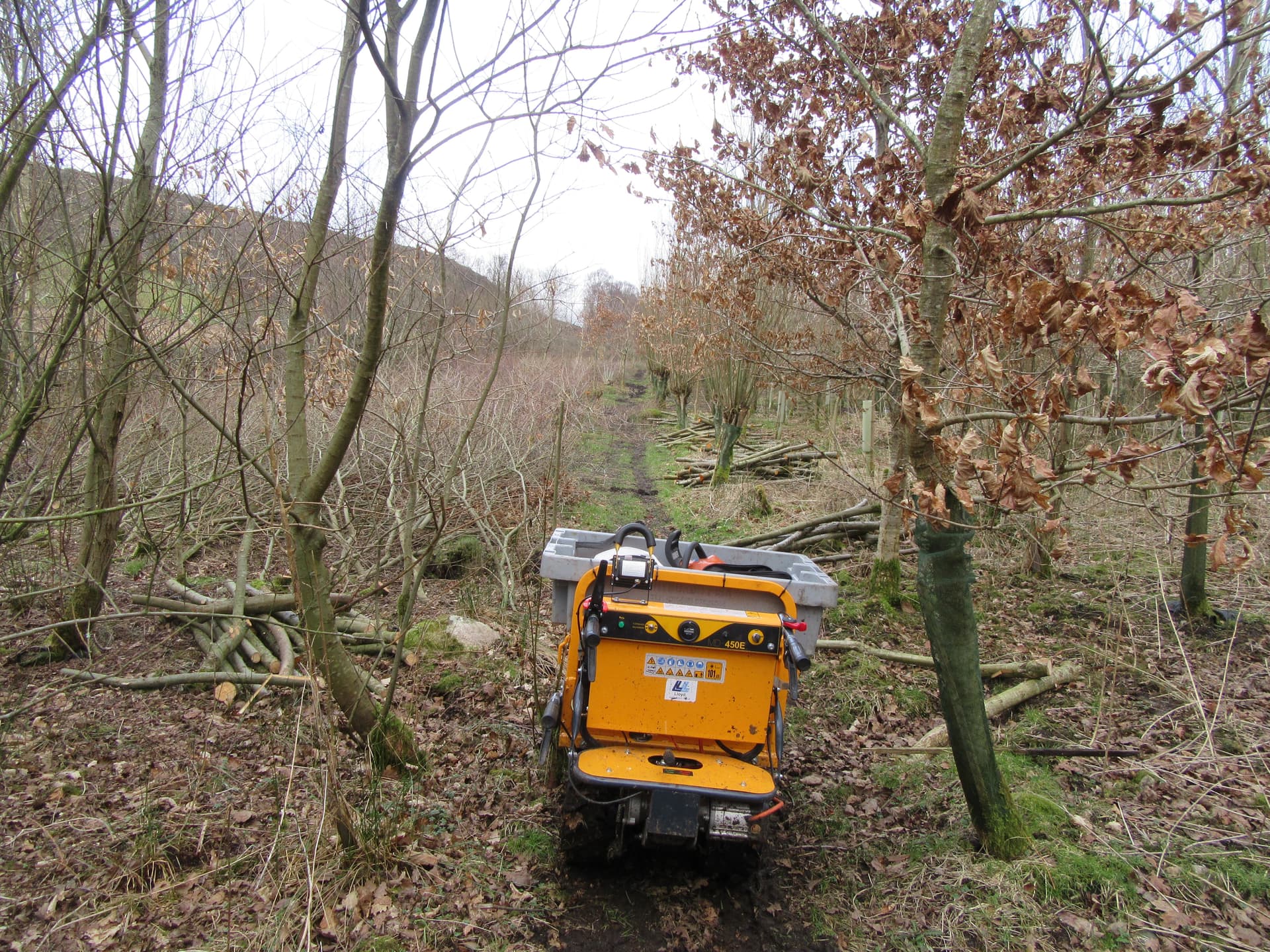
‘The thought of using a bowsaw and axe for the amount of coppicing we need to do appalls me. As I don’t live in the 19th century, I take full advantage of the technology available nowadays,’ Robert says. His list of indispensable equipment for coppicing includes: Stihl petrol chainsaws, a Brazilian machete, a Lumag electric power barrow, Makita cordless tools for maintenance and a Lawnflite scythe mower for cutting paths.
Lessons Learnt
‘For the most part, our coppice wood vision has gone according to plan, and indeed has exceeded expectations in the amount of material being produced,’ Robert notes. Partly this is due to a preponderance of willow in some areas where cuttings were interplanted among the initial plantings. The fast-growing willow has outshaded some other tree species – though alder holds its own – so the undesirable imbalance has at the same time provided the couple with larger quantities of fuel than they might otherwise have expected.
The first signs of ash dieback appeared in July 2017. By 2019 the disease was apparent throughout March and Spring Woods, but Robert noticed that many of the trees were self-coppicing – dying back from the top but putting out fresh growth from the base. That winter, as well as the rotation, Robert coppiced all ash that had shown signs of dieback, in the hope that this would stimulate regrowth. As an experiment, it was a failure: most of the ash trees died, but a minority have survived and seem resistant to dieback. ‘We hope to collect seed in the future, and try to propagate disease-resistant trees for planting here,’ Robert says.
Future Vision
As to his long-term vision, Robert says, ‘I would love to be able to see the coppice woods in 10 and 20 years, but as I have just turned 70, I won’t build my hopes too high. But one thing is quite sure – the trees will live much longer than me. I don’t have a problem with calling myself the owner of the land, but when it comes to the trees that grow on it I think of myself as their keeper – I’m looking after them for now, keeping them for someone else to look after when I am gone.’
Contact Details
If you wish to comment or ask about any details of the case study, please post a reply below and we will notify the author if they don’t spot it, so that we can all benefit from the learning. You can also contact Robert directly at garronfield.rd@gmail.com.
Last year Robert completed the manuscript of a book: Coppicewood: the Beautiful Cycle, the Generous Renewable. It is available as a pdf for anyone interested in reading it.


Coppice Case Study Project
This case study is part of Reforesting Scotland’s Coppice Case Study Project, which aims to map out Scotland’s coppice woodlands and share knowledge by publishing case studies. You can read more about the project and other case studies here.